

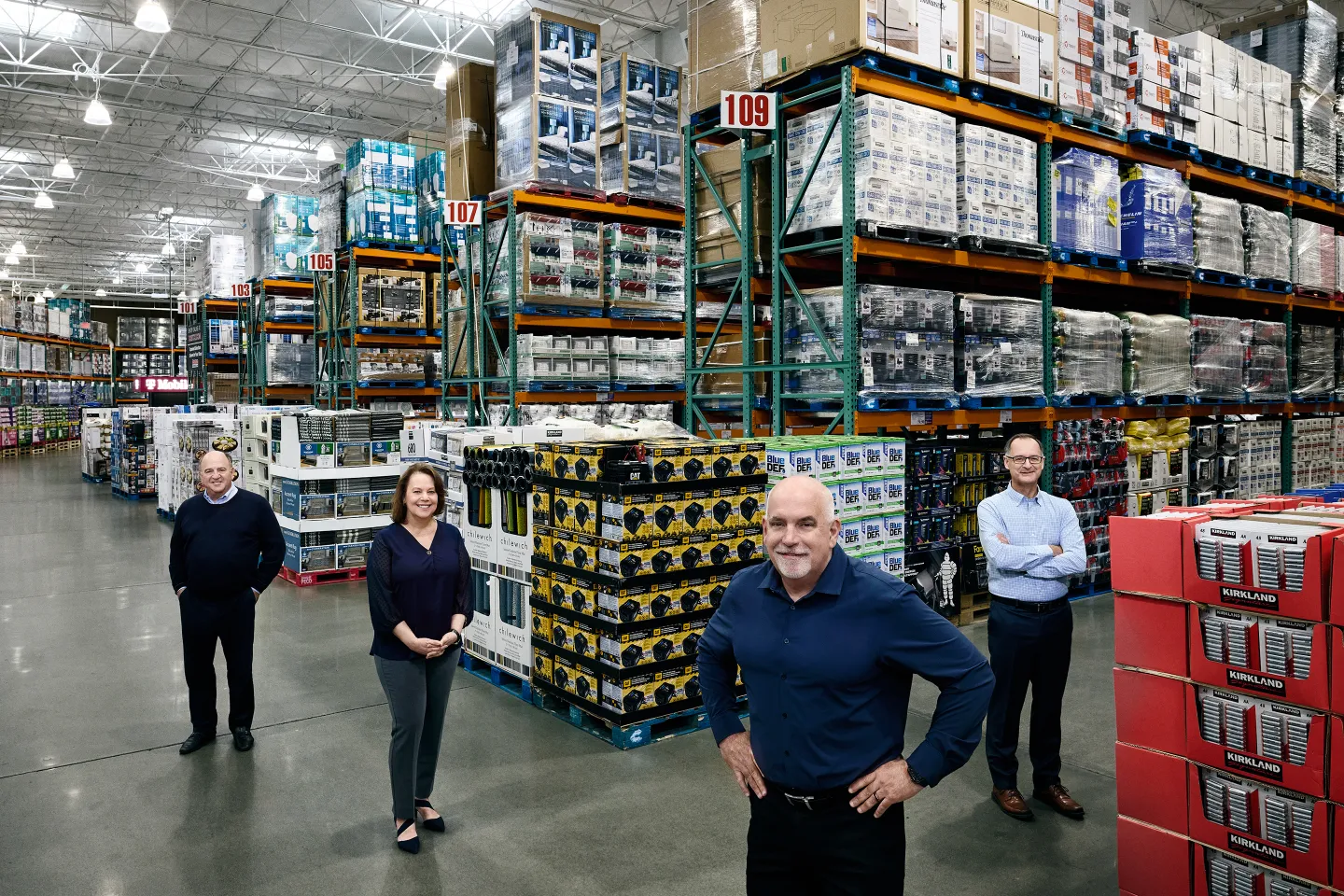
A closed Costco on a holiday or a rumor spreading on social media can send shoppers straight to Google. But a locked door is not the same as a failing business. These are two very different things, and it’s worth separating them clearly.
This article covers whether Costco is actually in financial trouble, what’s behind the closures people notice, how Costco’s business model works, and how to tell a routine closure from a company that’s genuinely struggling.
Costco Is Not Going Out of Business
Let’s answer the main question directly: No, Costco is not going out of business.
There is no evidence of bankruptcy, liquidation, or any companywide shutdown. As of March 2026, Costco operates 924 warehouses worldwide. It remains one of the largest retailers by revenue and global footprint. Nothing in the company’s current data supports a “going out of business” story.
Online rumors tend to travel fast, especially when someone spots a closed store or sees a local news headline about a Costco shutting its doors. But a single data point — one closed location or one dark parking lot — does not reflect what’s happening across a chain of nearly a thousand warehouses.
If you’ve been searching because you heard Costco was closing, the short answer is: it isn’t.
Why People Think Costco Is Closing
The confusion usually comes from one of two places: holiday closures or single-location shutdowns.
Costco closes on seven major U.S. holidays every year. That’s a standing company policy, not an emergency response. When shoppers show up on one of those days and find the warehouse dark, some assume something is wrong. Others share it online without the full context, and the rumor spreads from there.
A single warehouse closing in one city is also not the same as a chainwide contraction. Retailers occasionally close individual locations for all sorts of reasons — a lease ending, a building issue, a local market shift. That’s normal business behavior. It does not signal that the entire company is in trouble.
The practical advice here is simple: before drawing conclusions from a “Costco closed” headline, check whether it refers to a holiday, a specific location, or the entire chain. Those are three completely different situations.
Costco’s Holiday Closures Are a Policy, Not a Warning Sign
Costco’s holiday closures are deliberate and predictable. The company closes on major U.S. holidays to give employees time off. According to reporting from TheStreet, these closures are tied to Costco’s internal culture and its approach to treating employees well — not to financial problems or operational stress.
Think of it this way: if a law firm or accounting office is closed on Thanksgiving, nobody assumes the business is failing. They assume the staff has the day off. The same logic applies to Costco.
Mistaking a planned holiday shutdown for a sign of financial trouble is a common but avoidable error. If you know Costco’s holiday schedule in advance, there’s no ambiguity at all. The warehouse will be closed, it will reopen the next business day, and nothing about the company’s financial health has changed.
Planned closures are a feature of how the company operates, not a crack in the foundation.
How Costco’s Business Model Makes It More Stable Than Most Retailers
To understand why Costco is in a stronger position than many retailers, you need to understand how it actually makes money.
Costco is a membership-only warehouse club. You pay an annual fee just to shop there. That membership fee isn’t a minor add-on — it accounts for a majority of Costco’s net operating income. The membership revenue comes in every year regardless of how much product any individual member buys.
This is comparable to a subscription model. A company like a software platform or a streaming service collects recurring revenue from subscribers before delivering a single product. Costco does something similar. The baseline income is more predictable than what you’d see at a traditional retailer that lives and dies by product margins alone.
Product margins at Costco are intentionally thin. The company keeps prices low to drive traffic and maintain loyalty. But because membership fees cover a large share of operating income, Costco doesn’t need to squeeze every dollar out of each item it sells. That’s a structural advantage that most grocery chains and department stores simply don’t have.
This model doesn’t make Costco invulnerable to business risk — no company is — but it does make the revenue base more stable and predictable than a typical retailer.
What an Actual Retail Collapse Looks Like — and Why Costco Doesn’t Fit
It helps to know what real retail distress actually looks like, so you can compare it to what Costco is showing.
When a retail chain is genuinely in trouble, the signs are usually clear and consistent. You see mass store closure announcements across dozens or hundreds of locations. You see bankruptcy filings with court documentation. You see liquidation sales with “everything must go” signage. You see steep revenue declines reported in quarterly earnings. These aren’t subtle signals — they’re hard, documented facts.
Costco shows none of those signs. Instead, it shows a stable warehouse count, consistent membership renewal rates, and continued international expansion. A company that closes on holidays and occasionally shuts down a single underperforming location is behaving normally. That’s not distress — that’s standard operations.
For anyone evaluating the health of a retailer — Costco or otherwise — the right metrics to watch are store count trends over time, debt levels, revenue trajectory, and membership or customer retention data. Isolated closure headlines are not a reliable signal by themselves.
If you’re a business owner or manager trying to assess whether a major supplier or retail partner is at risk, this framework applies broadly. Look at the pattern, not the headline.
How to Evaluate Retail Health Without Getting Misled
Retail closures get a lot of attention online, often more than they deserve. A single store closing can generate headlines that make a company sound like it’s collapsing, even when the overall business is growing.
Here’s a practical checklist for evaluating whether a retail company is actually in trouble:
- Check the store count trend. Is the total number of locations shrinking significantly, or are closures isolated?
- Look for bankruptcy filings. Court filings are public. If a company has filed for Chapter 11 or Chapter 7, that’s verifiable.
- Review revenue data. Publicly traded companies report quarterly earnings. A declining revenue trend is a real signal.
- Watch for liquidation language. “Going out of business” sales, clearance of all inventory, and lease terminations across multiple sites are concrete indicators.
- Separate holiday closures from permanent closures. A store closed on July 4th is not news.
Costco passes this checklist without difficulty. There’s no bankruptcy filing, no mass closure wave, and no revenue collapse. The company operates at a scale — nearly a thousand warehouses globally — that simply doesn’t align with a business heading toward shutdown.
For more practical business coverage like this, Young Business Mag covers retail trends, business models, and company analysis for entrepreneurs and professionals.
The Bottom Line
Costco is not going out of business. The evidence points in the opposite direction: a large, active retailer with a strong membership model, consistent warehouse count, and no credible signs of financial distress.
What people are often reacting to is a holiday closure or a single-location shutdown — neither of which reflects the health of the broader company. A planned holiday closure is exactly that: planned. It happens every year, on the same days, as part of a deliberate policy.
If you’re a shopper, check the holiday schedule before making a trip. If you’re a business professional trying to evaluate Costco as a partner, supplier customer, or competitive reference point, look at the actual financial indicators. The data tells a very different story than the rumors do.
Read Also:
